
Stop Losing $247K Annually: AI Voice for HVAC
HVAC, AI Voice Agent, Missed Calls, Home Services
Why HVAC Companies Lose $247,000 a Year to Missed Calls — And How an AI Voice Agent Fixes It
If your phones aren’t answered every time they ring, you’re not just “busy” — you’re bleeding six figures in revenue that should already be on your books.
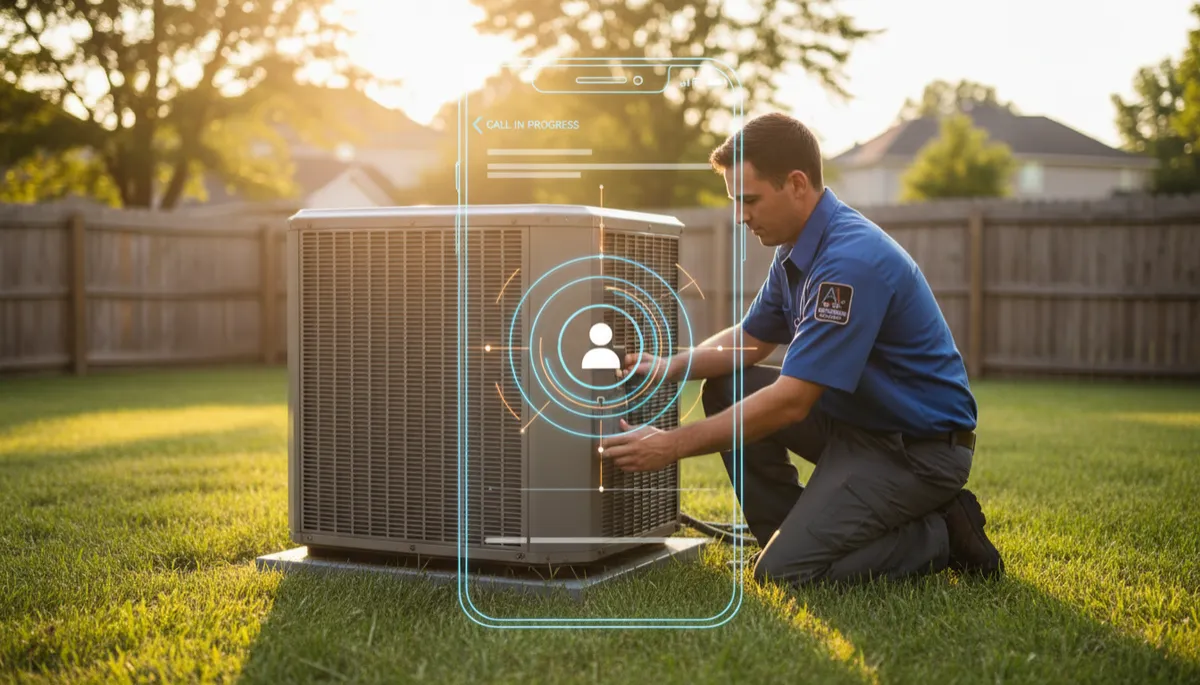
The $247,000 Problem Hiding in Your Phone Lines
Let’s get blunt. HVAC and home services businesses lose an estimated $247,000 every single year to missed calls. Not bad leads. Not tire-kickers. Calls. You paid to make the phone ring — then nobody picked up.
Across the industry, about 27% of all inbound HVAC calls go unanswered. During after hours, that miss rate doesn’t just climb — it approaches 100%. That means every night, every weekend, and every holiday, your marketing budget is sending prospects straight to voicemail or a dead line… and straight into your competitor’s schedule.
Here’s the part that really stings: the average revenue lost per missed call is around $1,200. Even emergency calls — no-heat, no-cool, system failures — average $450–$600 per ticket. Every time your team is on a ladder, driving, or already on another call and can’t answer, that’s real money walking away.
The Missed-Call Crisis in HVAC: Why It’s Worse Than You Think
HVAC is not a “call us whenever” business. When someone’s AC dies in July or their furnace fails in January, they’re not shopping — they’re panicking. And they’re not loyal. They’re urgent. 70% of customers hire the first company that responds.
If you miss that first call, you’re done. They don’t leave a voicemail. They don’t wait for a callback. They hit the back button on Google and call the next contractor on the list. That’s your $1,200 average ticket gone in 30 seconds because nobody could grab the phone in time.
And here’s the kicker most owners ignore: 41% of jobs booked online arrive after business hours. People are working late, putting kids to bed, and finally dealing with their HVAC problem at 8:30 p.m. Your office is closed. Your CSRs are gone. Your voicemail is full. Meanwhile, your competitors who invested in 24/7 call answering HVAC solutions are booking those jobs while you sleep.
Why Traditional Answering Services Don’t Fix the Problem
Many HVAC companies try to plug this leak with old-school answering services. On paper, it sounds fine: a human picks up, takes a message, and sends it over. In reality, it’s a weak band-aid on a deep cut.
- No real booking power: Most answering services can’t access your live calendar. They “promise a callback” instead of locking in the job on the spot.
- Zero HVAC context: They don’t know the difference between a maintenance tune-up and a no-cool emergency. Every call is treated the same, which means emergencies don’t get prioritized — and frustrated customers bail.
- Inconsistent quality: Different operators, different scripts, different levels of care. Your brand experience is all over the place.
- High cost, low control: You pay monthly whether they book real revenue or not — and you still miss calls during surges when lines are tied up.
If you’ve ever wondered why your missed calls HVAC problem persists even with an answering service, this is why. You don’t need more message-takers. You need a system that answers, qualifies, and books like your best dispatcher, 24/7, without dropping the ball.
Enter the AI Voice Agent: 24/7, No Payroll, No Excuses
This is where an AI voice agent for HVAC companies changes the game. Not a chatbot. Not a clunky IVR. A conversational AI that answers every call instantly, talks like a human, and actually gets work on your schedule.
How an AI Phone Agent for HVAC Works in the Real World
- Answers 24/7/365: Every call, every time — no rings, no holds. Whether it’s 2 p.m. or 2 a.m., your AI voice agent picks up on the first ring and greets the customer by your company name.
- Qualifies leads automatically: It asks the right questions: address, system type, issue description, urgency, warranty status, membership status, and more. It separates “real jobs” from price shoppers in seconds.
- Books jobs directly into your calendar: Integrated with your CRM or dispatch software, it sees your open slots and books the appointment on the spot. No “we’ll call you back.” The job is secured before the caller ever thinks about your competitor.
- Routes and dispatches: For true emergencies, it can escalate — sending SMS/email alerts to on-call techs or dispatch, tagging the job as urgent, and making sure the right person sees it fast.
- Handles FAQs and basic support: “Do you service my area?” “Do you work on heat pumps?” “What are your financing options?” The AI handles these instantly, saving your humans for complex issues and sales.
Contractors using AI voice agents routinely handle 3–4x more inbound calls without adding staff. No extra CSRs. No overtime. No burnout. Just more jobs booked from the calls you’re already generating.
The ROI: Turning Missed Calls into a Profit Engine
Let’s run conservative numbers and ignore the crazy-hot summer spikes for a minute. Say your shop misses just 20 calls a month — far below the industry’s 27% miss rate. At an average of $1,200 per missed call, that’s $24,000 a month walking out the door. Over a year, that’s $288,000. Right in line with that $247,000 annual loss estimate most HVAC and home services companies are quietly eating.
Businesses that deploy AI phone answering typically report missed-call reductions of around 75%. Apply that to the numbers above:
- 20 missed calls/month → 5 missed calls/month after AI
- 15 “saved” calls/month × $1,200 = $18,000 recovered revenue per month
- That’s $216,000 per year — from the exact same marketing spend.
Now factor in emergencies. Those $450–$600 no-heat/no-cool calls are often the start of bigger relationships: maintenance plans, system replacements, add-ons. Catching those calls first doesn’t just plug revenue leaks — it builds long-term customer value your competitors never see.
What to Look For in an AI Voice Agent HVAC Companies Can Actually Rely On
Not all “AI” is created equal. If you’re going to trust your phones — and your brand — to an AI phone agent for HVAC, you need more than a gimmick. You need a workhorse. Here’s what to demand:
- True 24/7 call answering HVAC coverage: No downtime, no “office hours.” It should answer weekends, holidays, and during call spikes without missing a beat.
- Natural, human-like voice: If it sounds robotic, your customers hang up. Look for conversational Voice AI that can handle interruptions, accents, and real-world chaos on the line.
- HVAC-specific workflows: It should understand service vs. install, memberships, maintenance plans, and emergency triage — not treat you like a dentist or a pizza shop.
- Deep integration with your tools: Dispatch software, CRM, calendar, SMS. If it can’t book directly or update records, you’re back to manual work and dropped balls.
- Clear reporting and call logs: You should see exactly how many calls it answered, how many jobs it booked, and how much revenue it helped secure.
- Proven results in home services: Look for vendors who understand your world. If you want the bigger picture, check out How AI Automation Transforms Home Service Businesses for real examples of contractors using AI to scale without adding headcount.
And if you’re still comparing options, it’s worth understanding the hard differences between modern Voice AI and old-school answering services. This breakdown — Voice AI vs. Traditional Answering Services — will show you exactly why the old model can’t keep up with today’s call volumes and expectations.
Stop Donating Jobs to Competitors: Put an AI Voice Agent on Your Phones
Here’s the uncomfortable truth: if you’re still relying on humans alone to catch every call, you’re not “old school” — you’re funding your competitors’ growth. The numbers are not on your side:
- $247,000+ a year in lost revenue from missed calls
- 27% of calls unanswered, nearly 100% after hours
- 41% of jobs showing up after business hours — when your phones are dark
- 70% of customers hiring the first company that responds
HVAC contractors who’ve already deployed an AI voice agent HVAC companies can trust are seeing the opposite story: 3–4x more calls handled, around 75% fewer missed calls, and a steady stream of booked jobs that used to vanish after the third ring or after 5 p.m.
Ready to See What an AI Voice Agent Can Do for Your Shop?
If you’re serious about growth, you can’t afford to keep guessing how many calls you’re missing or how much revenue is slipping through your fingers. You need hard numbers, clear options, and a concrete plan to fix it.